
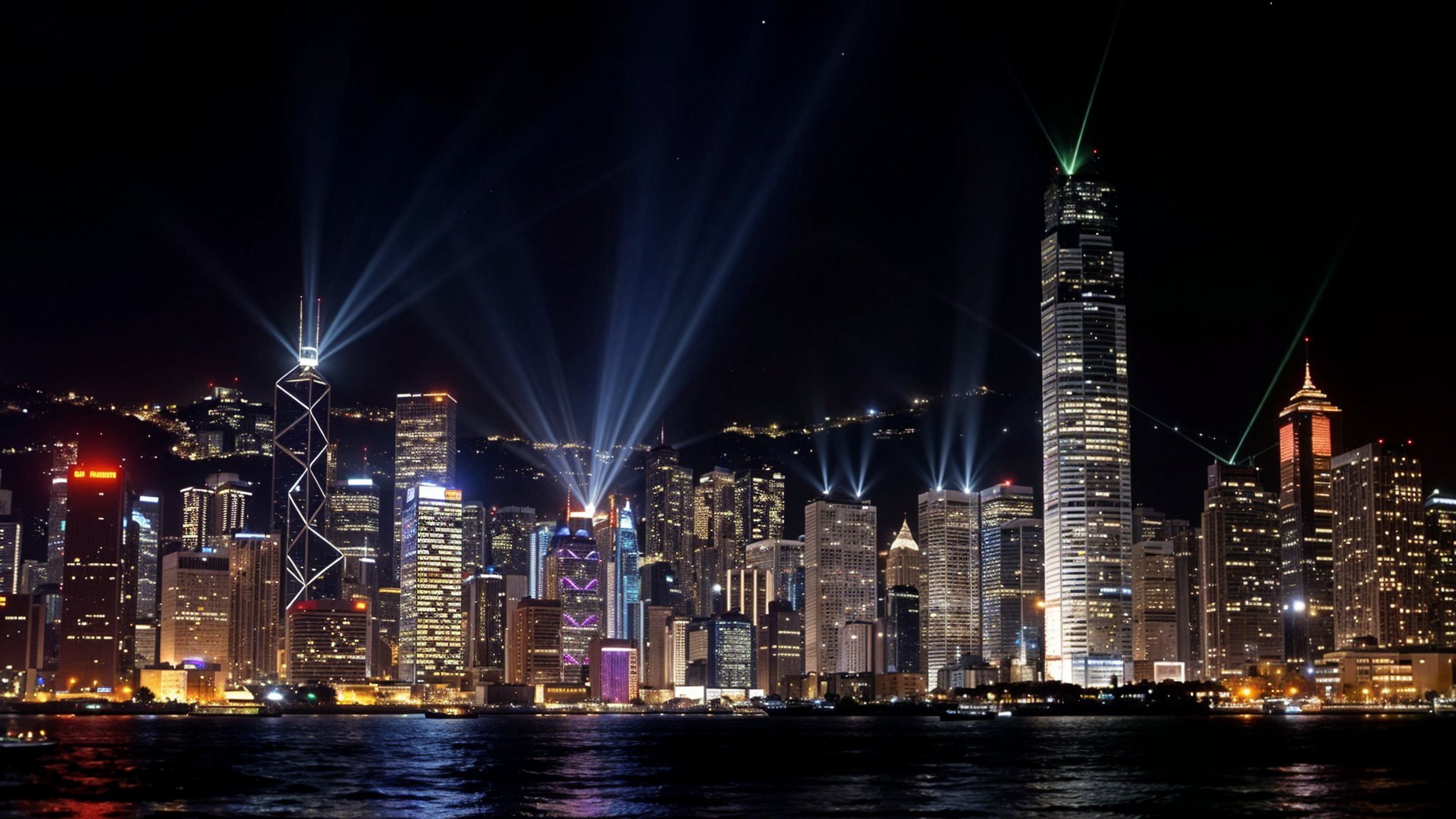
Hong Kong Harbor vibrant night skyline with illuminated high-rises, colorful light beams, and reflections on the water.
Turning Toxic Time Bombs into Thriving Eco-Cities:
Ending the Landfill Crisis for Good
Presented by Pan Gu Mister Shield Sustainability Series, Crystal Globe STF Team
Beneath the surface of our communities, aging landfills are erupting—releasing hazardous gases, threatening children's health, and poisoning ecosystems. It is time to dismantle yesterday's dumps, harness methane for clean local power, reclaim polluted land into living parks, and adopt zero-waste energy protocols that turn every ton of trash into clean electricity.
The Hidden Danger Beneath Our Feet:
Lessons from California's Landfill Eruption
On November 16, 2026, a stark warning erupted from the Chiquita Canyon Landfill in Los Angeles County, California. During routine drilling operations, workers accidentally pierced a pressurized underground gas pocket, triggering a violent blowout of decomposition gases and decaying garbage debris that shot a dark plume roughly 150 meters (nearly 500 feet) into the sky. Although firefighters confirmed there was no open flame or explosion and brought the immediate leak under control that evening, the event exposed a far deeper crisis:
even though this landfill stopped accepting new garbage in 2025, an unresolved underground smoldering reaction continues to burn beneath the surface.
Reference Broadcast: California Landfill Ecological Crisis — SETN News / Vanishing Borders
Environmental Impacts of Legacy Landfills
Subsurface Smoldering & Pressurized Gas Pockets:
Deep inside unventilated waste mounds, chemical and microbial reactions generate extreme heat (known as Elevated Temperature Landfill conditions), producing explosive pockets of methane, hydrogen, carbon dioxide, and pressurized toxic liquids.
Potent Greenhouse Gas Emissions:
Uncaptured methane traps dramatically more heat in the atmosphere than carbon dioxide over the short term, accelerating regional heatwaves and global climate instability.
Despite official assurances of low immediate gas readings, residents living near chronic landfill reaction zones report severe, ongoing harm:
Acute Respiratory & Nasal Trauma:
Parents near Chiquita Canyon have publicly described their children suffering frequent, uncontrollable nosebleeds—likened to a faucet that cannot be turned off—alongside chronic burning in the eyes, nose, and throat.
Potent Greenhouse Gas Emissions:
Uncaptured methane traps dramatically more heat in the atmosphere than carbon dioxide over the short term, accelerating regional heatwaves and global climate instability.
Neurological & Systemic Distress:
Repeated exposure to landfill gas odors and sulfur compounds triggers persistent headaches, dizziness, nausea, fatigue, sleep disruption, and aggravated asthma.
Chronic Air Pollution:
Persistent leaks of hydrogen sulfide, dimethyl sulfide, and volatile organic compounds (VOCs) such as benzene drift into nearby neighborhoods, schools, and ecosystems.
Human Health Risks for Neighboring Communities
Long-Term Carcinogenic & Cardiovascular Risks:
Prolonged exposure to airborne benzene and toxic VOCs elevates long-term risks of blood cancers (such as leukemia) and cardiovascular disease, while taking a heavy emotional toll on displaced and anxious families.
Capturing the Threat:
Diverting Landfill Emissions into Local Clean Energy
We cannot afford to let buried waste vent unchecked into our neighborhoods or flare away unused. Landfill Gas-to-Energy (LFGTE) systems transform a dangerous pollutant into a dependable, local renewable fuel—cutting fugitive methane emissions by up to 90% while offsetting fossil fuels.
How Local Methane Capture & Utilization Works
1.Engineered Extraction Network:
Vertical and horizontal perforated pipes are drilled strategically across the waste mound, surrounded by gravel packs to prevent clogging.
Local Electricity Generation:
Treated biogas drives reciprocating internal combustion engines, gas turbines, microturbines, or clean fuel cells to feed renewable electricity directly into the local municipal grid.
2.Negative-Pressure Vacuum Recovery:
Central blowers apply gentle vacuum suction, pulling rising methane and decomposition gases into header pipes before they can migrate sideways into neighborhoods or escape into the atmosphere.
4. Powering Local Communities:
Combined Heat and Power (CHP):
Nearby schools, greenhouses, hospitals, and industrial facilities use both the electricity and waste heat (steam or hot water) for maximum thermal efficiency.
3.Multi-Stage Gas Conditioning:
Collected raw landfill gas is dehydrated, filtered, and scrubbed to remove moisture, corrosive hydrogen sulfide, siloxanes, VOCs, and carbon dioxide.
Renewable Natural Gas (RNG):
Advanced upgrading compresses purified methane to pipeline-quality standards, fueling municipal transit buses, refuse trucks, and local heating networks.
Dismantling Hazardous Dumps & Reclaiming Living Parks
Closing a landfill gate is never the finish line—as Chiquita Canyon proves, sealed waste can smolder and off-gas for decades if left unmanaged. True environmental stewardship requires either dismantling the hazard or re-engineering the landscape into a safe, productive sanctuary.
Pathway A: Landfill Mining & Controlled Dismantling
For aging or unlined dumps threatening groundwater and nearby homes, landfill mining systematically removes the threat rather than leaving it buried forever:
Site Characterization & Safety Containment:
Ground-penetrating radar, thermal probes, and odor-control misting systems map gas pockets and hazardous zones before excavation begins.
Excavation & Mechanical Screening:
Excavators feed buried waste through industrial trommel and vibrating screens, separating fine decomposed soil from bulky debris.
Automated Resource Recovery:
Magnetic and eddy-current separators reclaim buried steel and aluminum, air-density classifiers isolate plastics, and hazardous materials are extracted for certified neutralization.
Pathway B: Engineered Capping & Ecological Park Transformation
When full excavation is impractical due to sheer scale, advanced multi-layer capping converts former wasteland into world-class public green space:
Ariel Sharon Park (Tel Aviv, Israel):
Built over the former 60-meter-high Hiriya "garbage mountain," the site now pairs anaerobic biogas digesters and an 80%-recovery recycling hub with rainwater-irrigated wildflower meadows, cycling paths, and an environmental education center.
Fuel & Land Recovery:
Clean separated soil is tested and reused for remediation or construction fill, non-recyclable combustibles are processed into Refuse-Derived Fuel (RDF) for clean energy plants, and the cleared land is restored to safe civic use.
Permanent Barrier Architecture:
Compacted waste is sealed beneath an impermeable geomembrane liner, an active methane-and-leachate capture grid, a drainage layer, bio-active soil covers that oxidize trace methane, and deep clean topsoil.
Proven Global Models:
Freshkills Park (New York, USA):
Once the world's largest municipal landfill, this 2,200-acre site is being transformed into a thriving ecological park featuring restored wetlands, wildlife habitats, sports fields, hiking trails, and a massive community solar array.
From Waste to Watts:
Singapore's "Garbage Fuels the City" Protocol
Why build new toxic landfills at all when modern engineering can turn everyday waste into clean power and near-zero residual footprint? Singapore—a densely populated island nation with strictly limited land—pioneered one of the world's most disciplined circular waste-to-energy frameworks.
The Five Pillars of Singapore's Closed-Loop Protocol
Upstream Sorting & Zero-Waste Policy:
Before garbage ever reaches a furnace, national frameworks (such as the Zero Waste Masterplan and Resource Sustainability Act) target a 70% overall recycling rate by 2030, diverting high-value metals, construction materials, e-waste, food waste, and packaging back into the circular economy.
Odor-Free Negative-Pressure Bunkers:
Waste collection trucks weigh in and discharge non-recyclable waste into massive enclosed refuse bunkers kept below atmospheric pressure—ensuring odors never escape into surrounding neighborhoods.
High-Efficiency Waste-to-Energy (WtE) Combustion:
Grab cranes feed waste into refractory-lined furnaces operating at 850∘C850^\circ\text{C}850∘C to 1,000∘C1,000^\circ\text{C}1,000∘C. Extreme heat reduces municipal solid waste volume by up to 90%, while superheated steam boilers spin turbogenerators to supply clean, reliable electricity to the city's power grid.
Strict Flue Gas Purification:
Before any exhaust exits 100–150 meter chimneys, multi-stage scrubbing—combining electrostatic precipitators, lime powder dosing, and catalytic bag filters—strips away dust, acid gases, heavy metals, and dioxins to meet stringent international air-quality standards.
Metal Recovery & Engineered Offshore Stewardship:
Magnets recover ferrous scrap metal from the remaining bottom ash. The inert ash is transported by enclosed barges to the offshore Semakau Landfill—lined with impermeable membranes and continuous leachate protection—where filled cells are topped with soil and transformed into lush mangrove and grassland habitats. Next-generation circular initiatives are now chemically stabilizing incineration ash into safe, permanent green construction materials to extend land sustainability even further.
| System Dimension | Legacy Open / Buried Landfills | Integrated Zero-Waste & WtE Protocol |
|---|---|---|
| Waste Volume | 100% buried; grows indefinitely into unstable mounds | Reduced by up to 90% after recycling & thermal recovery |
| Methane & Air Quality | Uncontrolled gas pockets, subsurface smoldering, toxic odors | Captured for local power/RNG or purified via catalytic flue scrubbing |
| Public Health Impact | Respiratory distress, nosebleeds, VOC exposure, community anxiety | Enclosed negative-pressure handling & strict emissions compliance |
| Energy Value | Wasted or flared as hazardous exhaust | Fuels municipal electricity grids, district heat, and clean transit |
| Land Legacy | Decades of hazardous monitoring and unusable dead zones | Reclaimed eco-parks, solar fields, wetlands, and green building materials |
Be the Spark That Transforms Waste into Renewal
Every community deserves clean air, safe water, and living green spaces—not smoldering mountains of yesterday's trash. By combining urgent remediation of dangerous landfills with proven methane recovery, ecological park reclamation, and Singapore-inspired waste-to-energy standards, we can protect our children's health and power our cities responsibly.
Have a local landfill issue or clean-energy case study you want us to spotlight next?
Reach out to our team and help build a cleaner, resilient, zero-waste world.
“ We remain committed to amplifying diverse voices through our conferences, projects, and social network activities. We look forward to collaborating to build a better world. “

Beijing Olympic Stadium, China
Lit-up stadium with crisscross design, resembling a bird’s nest, reflecting in water at night.