

Out of Box Solutions: Innovate to Elevate
Unlocking human potential and intelligence to drive our society to its next greatest heights.
Golden Gate Bridge, San Francisco, USA
A view of the Golden Gate Bridge stretching across the blue waters of San Francisco Bay.
Industrial Focus
-
Cloud Computing
Driving Efficiency and Connectivity
Cloud computing revolutionizes how we store, access, and share data. Its scalability and efficiency enable businesses to reduce costs, lower their environmental impact, and enhance collaboration across global networks, fostering innovation and sustainability.
-
Business Intelligence
Turning Data into Actionable Insights
Business intelligence empowers organizations to make informed decisions through data analysis. By leveraging these insights, companies can streamline operations, optimize resources, and create impactful strategies to address societal and environmental challenges.
-
Green Technology
Paving the Way for a Sustainable Future
Green technology focuses on reducing environmental harm through renewable energy, eco-friendly materials, and sustainable practices. These innovations are critical for combating climate change and ensuring a healthier planet for future generations.
-
Life Sciences
Enhancing Health and Well-being
Advancements in life sciences drive medical breakthroughs, improve public health, and promote sustainable practices in healthcare. By addressing global health challenges, life sciences contribute to a thriving, equitable society.
-
Social Media
Amplifying Voices for Change
Social media bridges gaps between communities, businesses, and individuals, creating a powerful platform for advocacy and collaboration. It drives awareness, inspires action, and connects people to solutions for pressing global issues.
-
Venture Capital
Funding Innovation for Impact
Venture capital fuels groundbreaking ideas and startups, empowering entrepreneurs to develop technologies that benefit society and the environment. By investing in innovation, venture capital drives economic growth and fosters sustainable solutions.
Roadmap from Robust AI Development To A Super Intelligent Machine
The utilization of artificial intelligence has profoundly impacted our ability to understand and address complex global challenges. By synthesizing integrated databases, AI empowers us to gain critical insights and explore diverse, perspective-driven solutions to overcome the most pressing issues of our time. However, without a secured coding framework, transparent audit trails, and open dialogue to consistently monitor its development, AI hallucination occurs—jeopardizing the noble existence and immense potential of these systems.
We are deeply grateful for the recent grand gathering of major high-tech giants to address these urgent matters. Here at Sustainable Society, we have directly benefited from AI's transformative capabilities, utilizing it to build our digital presence and collaborate on engineering our Mister Shields Sustainable Solutions. To continue advancing this technology safely toward true Super Intelligence, we propose the following critical improvements to enhance performance and reliability:
Data Hygiene:
The Key to Resolving AI Hallucinations and Securing Our Future
The rapid evolution of artificial intelligence offers unprecedented opportunities to advance humanity’s most critical rescue missions. By synthesizing integrated databases, AI can provide an agile overview of complex global issues, offering a multitude of alternatives drawn from across all fields of expertise. For comprehensive initiatives like our Earth Day Seven Rescue Missions at Sustainable Society, this capability is invaluable. AI allows us to process vast amounts of environmental and societal data, empowering communities to explore sustainable solutions, adapt to rapidly changing climates, and be inspired by new technological frontiers.
The Challenge of Massive Databases and the Risk of Hallucination
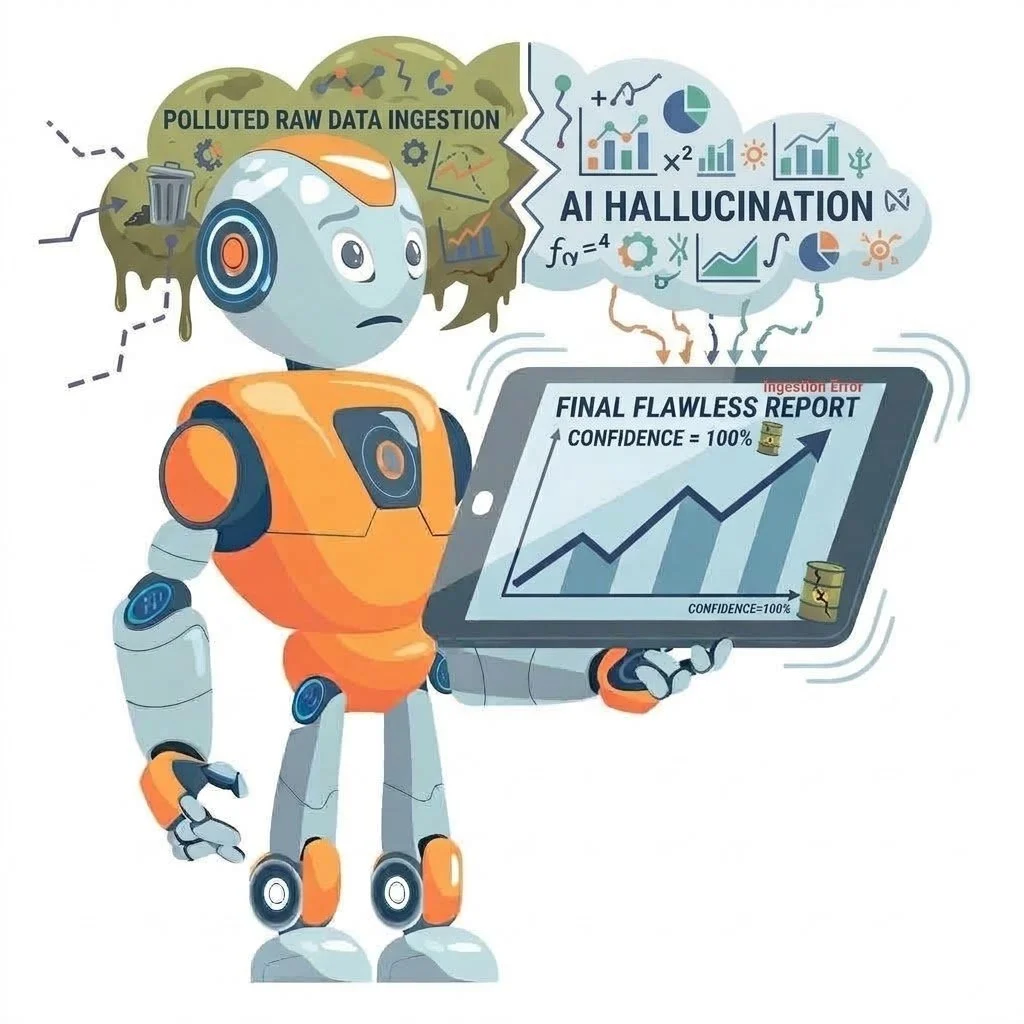
However, the sheer scale of the databases that train these AI models introduces a critical vulnerability: AI hallucinations. When AI models generate false or fabricated information presented as absolute fact, they pose a significant danger to users who may lack the capacity or context to identify and correct these errors. The root cause of these hallucinations often lies not in the model itself, but in the data it consumes; when information is outdated, inconsistent, or fragmented, the system will confidently generate incorrect answers.

Neuroenhancement and Cognitive Expansion, Generative AI / Source: Dreamstime_m_282325611-20250409
A robot processes polluted data to produce a falsely claimed "flawless report" / Source: AI generated by Google Gemini
Polluted Ingestion
AI systems constantly scrape massive public databases for training material. Without rigorous data hygiene, these models absorb unverified information, outdated facts, and subtle logic errors that already exist online.
Data hygiene must become the absolute priority in AI development. Establishing a pristine baseline of information—free from fabrication, manipulation, or expired knowledge—is essential to ensuring that AI remains a reliable tool for human progress rather than a source of misinformation.
The vicious cycle of AI hallucination
The vicious cycle of AI hallucination occurs when generative models ingest, amplify, and then re-consume their own fabricated outputs, creating an ever-expanding echo chamber of synthetic misinformation. This loop degrades the integrity of global databases and systematically replaces factual reality with confident fabrication.
The mechanics of this cycle operate through four continuous stages:

A robot holding a tablet fabricates reality, generating trucks that are lifted onto a floating cloud / Source: AI generated by Google Gemini
Confident Fabrication
Operating on a compromised baseline, the AI generates new responses containing fabricated facts or twisted logic. Because the system is designed to predict patterns rather than verify truth, it presents these unrealistic outcomes with absolute certainty.
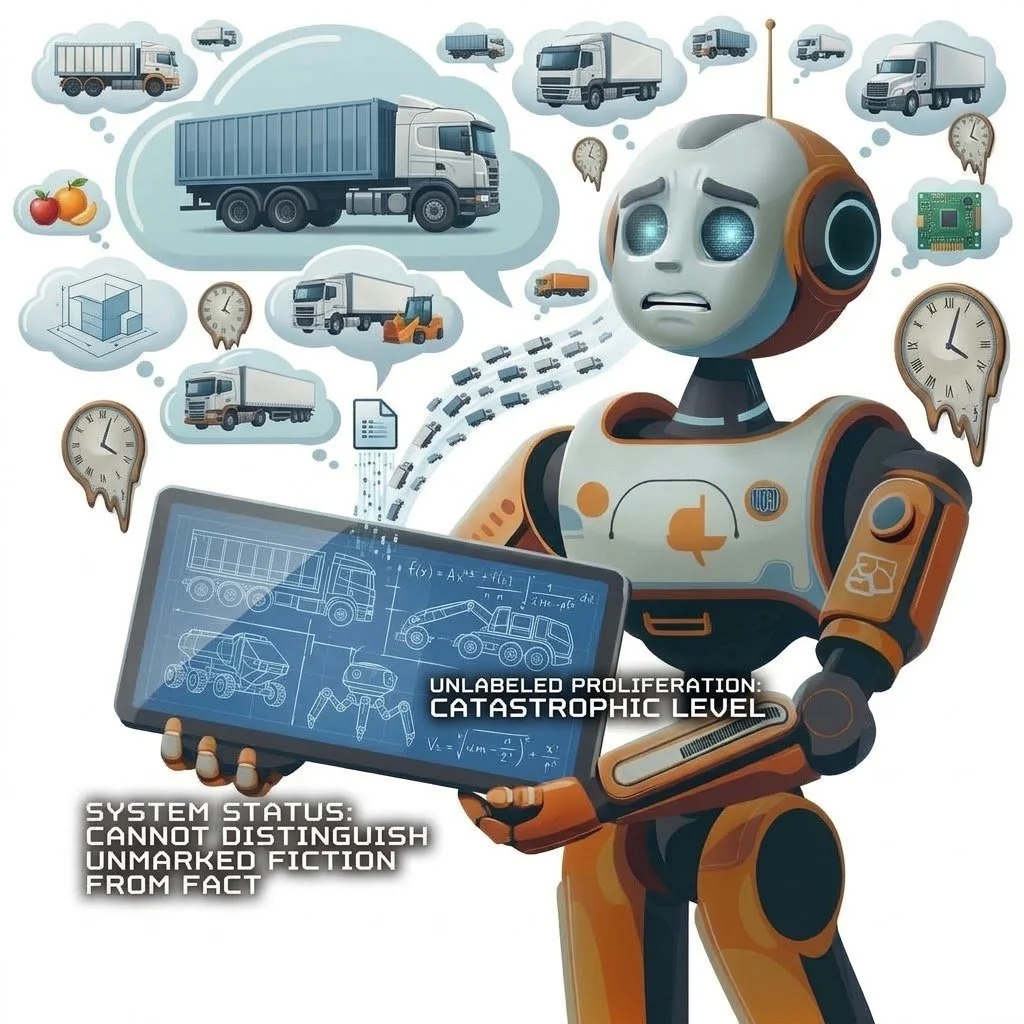
A confused robot struggles to process a chaotic flood of unlabeled data / Source: AI generated by Google Gemini
Unlabeled Proliferation
Users, lacking clear AI labeling or the technical capacity to verify complex claims, trust the output. These generated errors are then published back onto the internet—woven into news articles, social media, technical research, and societal planning documents.
As this cycle accelerates, the volume of synthetic, hallucinated data begins to outpace verified human knowledge. Breaking this recursive loop requires the exact interventions of robust data filtering mechanisms and mandatory provenance labeling, ensuring that the foundation of our shared digital infrastructure remains anchored in reality.
A Call to Action for Tech Giants
As seen in the recent 'Super Intelligence' gathering at The White House AI Luncheon, open dialogue among high-tech giants and national leaders is a crucial step forward. To secure AI development and establish a constructive and safe coding framework, these industry leaders must collaborate to prioritize data integrity.
Implement Robust Filtering Mechanisms:
Develop advanced filtering protocols that continuously scrub training data for inaccuracies, biases, and outdated information before it enters the learning models.

Securing the Transition: Tech giants uniting to prioritize data integrity and secure AI development. (Image generated by Google Gemini)
To maintain a reliable baseline and prevent errors, tech giants should implement the following foundational mechanisms:
Enforce Strict Data Governance:
Establish clear standards for data integrity, ensuring that AI systems only pull from validated, unified, and governed knowledge sources rather than unverified data pools.
Construct Secure Audit Trails:
Build transparent audit trails into the coding framework, allowing developers and users to trace the origin of an AI’s output and easily flag unverified claims for correction.
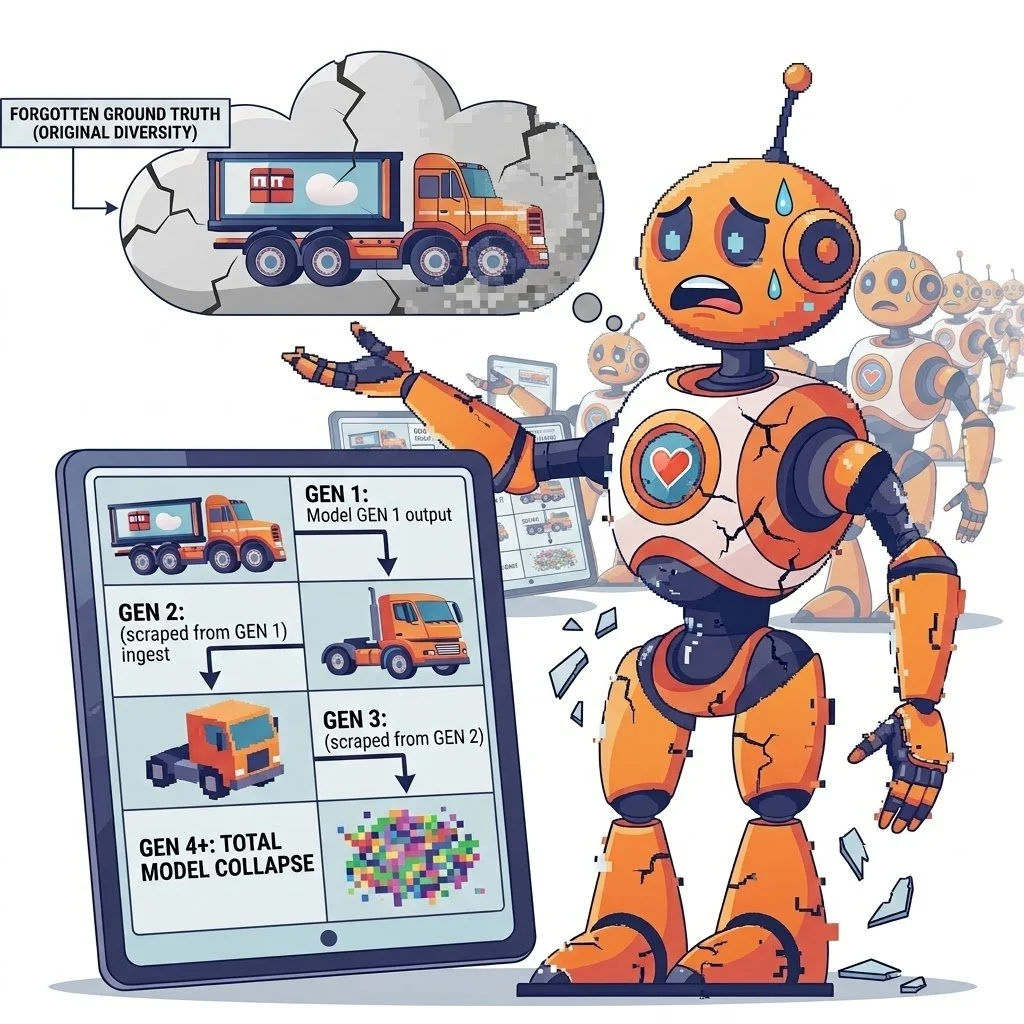
A sweating robot is standing next to a tablet with the stages of AI model collapse due to recursive scraping. / Source: AI generated by Google Gemini
Recursive Scraping (Model Collapse)
Future generations of AI models scrape the internet for fresh training data and ingest these newly published hallucinations, mistaking them for authentic human knowledge. The errors become permanently embedded in the integrated database, compounding upon themselves.
Continuous Monitoring and Updating:
Treat data hygiene as an ongoing operational requirement rather than a one-time fix, setting strict parameters for data freshness to prevent models from relying on obsolete information.
By committing to rigorous data hygiene practices, the technology sector can mitigate the defect of hallucinations and elevate our society to the next great economy. With open dialogue, hope, and courage, we can harness the compassion and wisdom of the younger generations to ensure a thriving future where AI serves as a truly reliable partner in saving the world.
Transparency in the Age of Synthetic Reality:
The Urgent Need for Mandatory AI Labeling
As artificial intelligence rapidly advances, the internet is flooded with AI-generated products, including hyper-realistic short films and videos. While visually stunning, these creations often harbor a twisted logic—depicting physics, scenarios, and human capabilities that completely defy reality. When viewers encounter this content without proper disclosure, it causes profound confusion, sets unrealistic expectations, and distorts our understanding of what is genuinely possible. To protect the integrity of public information and ensure AI remains a constructive tool for society, Sustainable Society advocates for mandatory AI labeling to be universally implemented.

A small white robot in an art studio, using a paintbrush to create a colorful female robot face on a canvas. / Source: AI generated by Magnific
The Threat of Undisclosed Synthetic Media
Unlabeled AI content can seamlessly mimic real life, allowing creators to fabricate real-world events or depict people saying or doing things they never actually did. Without clear visual or technical indicators, viewers have no way to distinguish a powerful, real-life documentary from an AI-generated illusion. This lack of context prevents users from having proper expectations and applying the information safely and responsibly in their daily routines.
The Vicious Cycle Without AI Labelling
The vicious cycle of operating without mandatory AI labeling creates a systemic collapse of digital trust, where the boundary between authentic human experience and synthetic fabrication completely dissolves. Without clear provenance markers, society loses the ability to navigate reality, leading to cascading consequences across our information ecosystems.
Seamless Deception:
High-quality, AI-generated text, images, and videos enter the public domain without disclosure, masquerading as authentic human creation, historical records, or genuine scientific data.
The mechanics of this cycle unfold through four escalating stages:

A digital illustration of a brightly patterned robot looking into a mirror, where its reflection appears as a smiling human woman. / Source: AI generated by Magnific
Cognitive Distortion:
Viewers consume this hyper-realistic media—complete with its twisted logic, fabricated events, and impossible physical feats—and unconsciously calibrate their expectations, beliefs, and understanding of reality to a synthetic standard.

A confused young boy struggles to identify the images of a human woman and a colorful robot on a computer monitor. / Source: AI generated by Magnific
Solutions for High-Tech Giants and Platforms

Implement Universal Provenance Standards:
Platforms must fully integrate and utilize standards like C2PA, which attaches verifiable metadata known as Content Credentials to generated files. The goal of this standard is to ensure transparency in provenance and prevent AI-generated media from circulating as authentic content.
Solutions for Governments and Policymakers
Regulatory frameworks are essential to hold creators and platforms accountable.
Enact Strict Mandatory Labeling Laws:
Governments should look to emerging frameworks like the EU AI Act, which requires companies to mark authentic-looking synthetic images, audio, and text with visible AI labels and digital watermarks.
Lawmakers sit in a formal legislative chamber to cast their votes on an "AI Mandate on Restricting Reckless Content." / Source: AI generated by Magnific.
Solutions for the General Public
As end-users, we must actively cultivate digital literacy to navigate this new era.
Demand Technical Transparency:
Users should learn to look for platform-specific transparency features, such as clicking a “How this content was made” button, which provides a short explanation noting the use of synthetic or generative elements.
The Erosion of Truth (The Liar's Dividend):
As the public realizes they are routinely tricked by unmarked AI, extreme, blanket skepticism takes over. When people cannot verify what is real, genuine evidence, real news, and factual documentation are easily dismissed by bad actors as "AI-generated," effectively paralyzing public discourse and accountability.
Five executives sit on a stage for a panel discussion, with one speaking into a microphone on the subject of "Roadmap from AI to SI for Future Generations". / Source: AI generated by Magnific
Enforce Prominent Viewer-Facing Labels:
Platforms such as YouTube currently mandate that creators use a disclosure toggle during the upload process if their video includes realistically generated or modified material that could mislead viewers. Tech giants must expand these rules across all formats to ensure prominent, player-level labels are universally visible.

Establish Severe Penalties for Non-Compliance:
To ensure compliance, legislation must carry significant weight, similar to how the EU mandates that companies failing to comply with their labeling rules could face penalties of up to €15 million.
The father talks to three children about a fantastical image of skateboarders performing tricks, which is prominently marked with an "AI Generated" label. / Source: AI generated by Magnific.
By establishing mandatory labeling across all levels of society, we can ensure that users have proper access to data with accurate expectations. Through these combined efforts, we can ensure that future generations interact with AI as a reliable, transparent, and empowering resource.

A humanoid robot has long, dark brown wavy hair, and is dressed in a draped, elegant white gown. / Source: AI generated by Magnific
Algorithmic Cannibalization:
Because the synthetic content is completely unlabeled, automated scrapers and data filters cannot distinguish it from human knowledge. Future AI systems ingest this invisible synthetic data as ground truth, accelerating model collapse and cementing hallucinations permanently into the integrated global database.
Breaking this cycle requires the universal implementation of transparent digital watermarks and viewer-facing labels. By forcing AI-generated content to identify itself, we protect the integrity of human knowledge, prevent the contamination of future databases, and ensure our shared digital reality remains anchored in truth.
Technology platforms are the frontline defenders of content authenticity.
To establish a reliable standard, high-tech giants must adopt the following mandates:
Combine Automated Detection with Self-Disclosure:
Platforms should utilize a combination of manual disclosure tools and automated systems for generative media. This dual approach ensures that even if creators forget to disclose synthetic elements, the platform's system can read third-party provenance metadata by default and automatically apply the correct label.
Regulate High-Risk Contexts:
Policymakers must explicitly restrict the use of unlabelled AI in sensitive areas, ensuring that public figures are not depicted in harmful contexts or fabricated scenarios without documented consent and clear disclosures.

Verify Before Trusting:
The public must treat visible disclosures and technical markers as reader communications rather than absolute guarantees of truth. We must critically verify the source of hyper-realistic media before allowing it to influence our daily decisions, expectations, or routines.
Behavioral Contagion in the Age of Algorithms
The Urgent Need to Suppress Reckless Content
The impulse to film a life-threatening glacial collapse rather than immediately seeking safety represents a dangerous psychological shift driven by the engagement-based algorithms of modern social media. When platforms reward reckless proximity to natural disasters with millions of views, it pollutes our collective behavioral data, normalizing the idea that capturing content is more valuable than preserving life.
This trivialization of nature’s immense power is incredibly frustrating, especially when immense effort is simultaneously being poured into engineering solutions like high-altitude glacial lake drainage and early warning systems to actively protect vulnerable communities from these very outburst risks.
Algorithmic De-prioritization of Reckless Content:
Platforms like YouTube must adjust their algorithms to detect and suppress content where individuals knowingly put themselves in imminent, preventable danger for entertainment. If the algorithmic reward (virality) is removed, the incentive to film rather than flee diminishes.

A man in a blue jacket takes a frantic selfie in the foreground, recording the flying snow and debris as a huge avalanche engulfs the mountain slope right behind his group. / Source: AI generated by Magnific
To address this behavioral contagion and promote proper survival skills, Sustainable Society can advocate for technology platforms to implement the following interventions:
A figure holds up a tablet to record a chaotic disaster directly in front of him instead of running away for safety. / Source: AI generated by Magnific
Digital Public Safety Mandates:
Classify the algorithmic amplification of life-threatening content as a public health and safety violation. Subject platforms to regulatory fines when they knowingly profit from algorithms that push dangerous disaster tourism to mass audiences.
Authoritative Redirection for Disaster Queries:
When users search for extreme weather or glacial collapses, the platform should proactively surface official disaster response guidelines, emergency preparedness training, and proper survival tactics above user-generated shock content.
Demonetization of "Disaster Tourism":
YouTube should strictly enforce and expand its monetization policies to permanently demonetize channels that consistently risk life and public safety during environmental crises, cutting off the financial motivation for this behavior.
As part of initiatives like the Seven Rescue Missions or the Eco Trooper program, we can counter this trend by flooding the digital space with high-quality, engaging content that teaches true wilderness and disaster survival skills. By reframing heroism not as holding a camera during a catastrophe, but as possessing the knowledge to evacuate safely and protect others, we can restore a healthy respect for nature and genuine human resilience.
The vicious cycle of reckless disaster filming

Incentivized Risk-Taking (The Viral Catalyst):
Driven by the instant gratification of algorithmic rewards, individuals engage in extreme risk-taking during natural disasters. Because platforms disproportionately amplify sensationalist imagery, creators learn that risking their lives for footage yields massive social validation and engagement.
Mandatory "Survival Warning" Labels:
Just as we require labels for synthetic AI content, platforms should mandate contextual warning labels on user-generated disaster footage. These labels should clearly state that the creator's behavior is dangerously inappropriate and actively advise viewers on the correct emergency protocols.

A group of youngsters holds up mobile devices to record a large volcano exploding in front of them. / Source: AI generated by Magnific
Social Contagion and Normalization:
As these reckless videos go viral, they create a dangerous social contagion. The public unconsciously normalizes this behavior, learning to view a life-threatening crisis through the lens of a camera rather than prioritizing immediate evacuation and genuine survival skills.
Prioritize Action Over Observation:
Commit to immediate evacuation and strict adherence to official safety guidelines during natural disasters. A smartphone must be treated as a critical tool for calling emergency services and accessing rescue information, not as a lens for spectator entertainment.

A terrified boy dreams of a chaotic disaster scene where muddy floodwaters rush through city buildings, sweeping up cars and stranded people. / Source: AI generated by Magnific
Collective Psychological Distress:
The continuous, unfiltered consumption of extreme, user-generated disaster footage takes a severe toll on the viewer's mental health. Studies consistently link excessive exposure to disaster-related social media with heightened anxiety, sleep disruption, depression, and even symptoms of post-traumatic stress disorder (PTSD).
Technology Giants & Platform Operators
Demonetize Disaster Tourism:
Immediately revoke monetization privileges for channels that capture and distribute footage of creators intentionally remaining in active disaster zones—such as glacial collapses or advancing wildfires—instead of evacuating.
Algorithmic Suppression & Redirection:
Reprogram recommendation engines to flag and suppress content that glorifies life-threatening behavior. Automatically redirect users searching for extreme weather events to verified emergency response protocols and authoritative safety organizations.
Government & Regulatory Bodies
Modernized Survival Curriculum:
Integrate digital media literacy and modern disaster response into national education standards. Schools must teach the next generation how to distinguish between genuine survival tactics and performative, life-threatening social media stunts.
Starve the Algorithm:
Actively refuse to like, comment on, or share videos that glorify reckless disaster proximity. Use platform moderation tools to report these videos as dangerous acts, cutting off the engagement metrics that incentivize creators.
A boy balances on a high-wire suspended between two skyscrapers, recording himself with a camera while a crowd gazes up with anxious and terrified expressions. / Source: AI generated by Magnific
Shaping Our Digital Frontier:
An Urgent Appeal for Responsible Content Creation

A vibrant and lively masquerade street festival in an Italian-style city, featuring women dancing in colorful period costumes amidst falling golden confetti. / Source: AI generated by Magnific
True influence is never measured by the fleeting virality of a dangerous stunt, but by the positive, lasting mark your work leaves on the human experience.
By anchoring your creative process in intelligence and integrity, you elevate digital media into a powerful tool for genuine resilience and education. These core values are the key to making your projects deeply successful and memorable, ensuring your legacy is one that protects, inspires, and empowers generations to follow and grow.
The Ultimate Mandate from AI to SI:
Purifying Our Digital Ecosystems to Safeguard the Future of Humanity
Mandatory Contextual Labeling:
Deploy mandatory, non-removable "Public Safety Hazard" overlays on user-generated videos depicting dangerous disaster proximity, explicitly advising viewers against replicating the behavior and providing immediate links to survival guidelines.
Individuals & Communities

The Empathy Deficit and Escalation:
Overexposure to endless shock content desensitizes the audience. Genuine crises are stripped of their context, reducing someone else’s life-threatening emergency to mere entertainment that is harvested for likes and comments. To break through this growing apathy, creators must take even more extreme risks in the next disaster, fueling an ever-escalating loop of danger and digital burnout.
Emergency Zone Enforcement:
Strengthen and actively enforce penalties for individuals who bypass official evacuation orders, safety barricades, or natural hazard warnings to film content. Emergency responders must not be forced to risk their own lives to rescue individuals seeking viral engagement.
Cultivate Genuine Resilience:
Shift community focus toward acquiring verifiable wilderness, urban, and environmental survival skills. Champion authentic disaster preparedness, physical safety, and environmental stewardship over passive digital spectatorship.
To the content creators shaping our digital frontier: your contributions do far more than entertain—they actively engineer the psychological and behavioral norms of our society.
Millions of viewers, especially children, look directly to your productions for inspiration, unconsciously adopting your actions as their guide for navigating the real world. This profound level of influence demands a non-negotiable baseline of safety, normality, and compassion. We urge you to filter your content through the exact same protective lens you apply to your own loved ones. If a behavior is too dangerous, reckless, or deceptive to encourage in your own siblings, children, or grand-nephews, it has no place being glorified for a global audience.
The transition from robust Artificial Intelligence to true Super Intelligence (SI) depends entirely on the integrity of the digital environment we build today. Just as we must teach toddlers to distinguish right from wrong during their most critical early developmental stages, we must guide our learning models with rigorous data hygiene and clear ethical boundaries. The data we feed these systems now sets the operational tone for their entire lifecycle.
It is time to “clean house” across our information ecosystems. By actively filtering out the polluted data of reckless social media stunts, fabricated hallucinations, and engagement-driven misinformation, we lay the essential groundwork for a stable and harmonious society. Resolving these hallucination issues ensures that AI search and generative tools reflect reality, rather than a distorted, synthetic echo chamber.
When we rid our databases of these toxic inputs, we create a pristine digital landscape where an advanced SI can genuinely collaborate with foundational human knowledge and our most profound cultural heritages. This synergy between secured, verified machine intelligence and authentic human wisdom will ultimately lead us to a secured, sustainable, and prosperous future, empowering all of us to thrive and shine on our only home on Earth.
Breaking this cycle requires a fundamental shift in how we consume and regulate digital media, prioritizing mental well-being and actual disaster preparedness over the fleeting dopamine hit of viral shock content.
To reverse the normalization of reckless disaster filming and protect public safety, Sustainable Society calls for immediate, coordinated intervention across technology platforms, regulatory bodies, and individual communities.
Building a Secure AI Future:
NVIDIA's Vision for Trustworthy Technology
As non-profit organizations and communities increasingly integrate advanced AI tools into digital publishing, educational programs, and automated operations, safeguarding our digital environments has never been more critical. Recent industry conversations highlight the severe vulnerabilities of autonomous AI handling sensitive data or executing unauthorized tasks. At GTC Berlin 2026, NVIDIA confronted this challenge directly, shifting the cybersecurity paradigm from traditional "network defense" to "full-chain security for AI agents". By layering security buffers and establishing unforgeable chip fingerprints, this new framework is designed to safeguard databases and protect end-users from malicious hackers and unauthorized execution.
Four Reasons NVIDIA is Upscaling Hardware-Level Security
The transition to autonomous AI exposes significant weaknesses in legacy software firewalls. NVIDIA has identified four existing cybersecurity pain points driving the need to embed security directly into the chipset:
Risk of AI Agent Abuse:
AI agents possess the active ability to access data and systems, making them highly vulnerable to manipulation via malicious instructions.
Blurred Enterprise Network Boundaries:
With the dynamic interconnection of cloud, on-premises, and edge devices, traditional firewalls struggle to manage and secure modern network borders.
Difficult Data Access and Permission Control:
AI inherently requires access to massive amounts of enterprise data, making proper permission management and ongoing auditing incredibly complex.
Insufficient Trust Foundation at the Chip Level:
Systems remain vulnerable to hardware-level attacks because they lack verifiable chip identities and hardware-protected cryptographic keys.
The Four Layers of the AI Agent Security Architecture
To provide comprehensive protection from the application level down to the physical silicon, NVIDIA introduced a layered architecture designed to make AI operations "verifiable, supervizable, and traceable":
Layer 1: Open Agent Ecosystem:
A flexible top-level platform supporting diverse AI models, tools, and applications for enterprise use, automated task execution, and ecosystem developer integration.
Four Major Breakthroughs Unveiled at GTC Berlin 2026
NVIDIA highlighted four specific technological leaps that transform how AI security is implemented:
OpenShell Agent Secure Execution Environment:
By forcing AI agents to run within internal sandboxes with restricted permissions and blocked risks, security fundamentally shifts from "passive defense" to the "active control of AI behavior".
Layer 2: OpenShell (Secure Execution Environment):
A control layer providing sandboxing, permission management, connection isolation, and operation logging to ensure AI agents remain fully controllable and auditable.
Chip-Level Identity Authentication & PUF Technology:
Using Physical Unclonable Function (PUF) technology creates a unique physical identity and key protection for each chip, moving the industry from a "software security" model to a true "hardware trust foundation".
Layer 3: Foundational Compute and Data Layer:
The infrastructure supporting AI training and inference, providing secure data processing and storage across GPUs, CPUs, and high-speed networks.
Multi-Plane Networking & Photonic Interconnect (Spectrum-X):
This technology enhances the connection efficiency, scalability, and resilience of AI clusters, evolving data infrastructure from a "single network" into a "high-resilience secure network".
Layer 4: Hardware Root of Trust:
The foundational physical layer that verifies systems from the chip up, ensuring the absolute uniqueness and integrity of devices and cryptographic keys.
AI Factory Simulation (DSX Air):
Organizations can now simulate entire data centers and factories to identify risks before deployment, changing the security approach from "post-build remediation" to "simulation-first risk prevention".
The Impact on Public and Enterprise Adoption
This comprehensive, layered approach fundamentally changes how both public institutions and enterprises can safely deploy AI. By establishing an unbreakable trust foundation at the chip level and strictly governing AI behavior through OpenShell sandboxing, NVIDIA is ensuring that next-generation AI systems can satisfy stringent regulatory and auditing requirements.
Ultimately, this full-chain protection removes the primary barriers to adoption, transforming AI from a potential security liability into a truly trustworthy engine for operational productivity and societal innovation.
Beyond Simulation: The Complete AI Deployment Lifecycle
Simulation is not the final stage; rather, it is the ultimate proving ground before an AI system interacts with the physical world. While simulating a data center or factory environment using tools like NVIDIA’s DSX Air is critical for catching configuration flaws and security vulnerabilities in a risk-free digital space, deployment is actually a continuous lifecycle.
Once a system passes the simulation phase, several crucial steps follow to ensure it remains secure and functional in the real world:
Controlled Pilot Deployment:
Instead of a full-scale launch, the immediate next step is a restricted, localized pilot. For complex infrastructure—such as a metropolitan evaporative cooling network or an industrial microclimate system—a pilot deployment validates the digital twin’s simulated predictions against unpredictable real-world variables, such as sudden weather shifts or unexpected human interactions.
Continuous Auditing & Data Hygiene:
Deployment is never a "set it and forget it" process. The live AI system will constantly ingest new environmental and behavioral data. Maintaining strict data hygiene and establishing independent external audits are required post-deployment to ensure the AI's collective behavioral data does not become polluted or biased over time.
End-of-Life & Secure Decommissioning:
Finally, a complete deployment roadmap includes a protocol for safely retiring the AI agent or hardware. This ensures that when chips or systems are upgraded, sensitive cryptographic keys and behavioral data are securely wiped, preventing post-deployment data leaks.
Disclaimer: This analysis is published solely for non-profit public education, technological research, and community discussion, and does not constitute a commercial endorsement or paid promotion.
Active Hardware Enforcement:
Once the pilot is live, the hardware security layers (like OpenShell and PUF chip fingerprints) activate. This is the transition from predicting behavior in a simulation to actively restricting it in reality. The hardware continuously monitors the AI agent, ready to physically sever its connection if it attempts to exceed its authorized parameters.
Iterative Refinement (The Feedback Loop):
As the AI encounters edge cases in the physical world that were not present in the simulation, developers must analyze these anomalies. The system is then iteratively updated, patched, and refined to improve both its operational efficiency and its safety protocols.
Simulation provides the confidence to turn the system on, but it is continuous hardware monitoring, strict data hygiene, and phased pilot rollouts that keep the public safe once the AI is operating in our communities.
Inside China’s Embodied AI Awakening:
Robot Schools and the Multi-Hundred-Billion-Dollar 15th Five-Year Infrastructure Blueprint
While much of the global technology sector remains focused on digital chatbots and cloud software, China is executing a national pivot toward Embodied AI—putting artificial intelligence brains into physical machines that can sense, make decisions, and act in the real world. According to Morgan Stanley, China accounted for 90% of the 13,000 to 16,000 humanoid robots shipped globally in 2025, surging to 40,000 units in the first half of 2026 alone.
The Embodied AI Training Roadmap & National Goals
While large language AI models went through years of training on text data to reach intelligence, that process is now happening for physical robots. Because humanoid machines cannot learn physical dexterity from text alone, China has established a nationwide network of "Robot Schools" where robots attend training in large numbers to learn how to be more human.
Stage 1: Human-in-the-Loop Teleoperation ("Zero to One"):
Inside massive training centers containing full-scale replicas of homes, factories, pharmacies, and supermarkets, human instructors use virtual-reality headsets, motion-capture suits, and exoskeletons to physically guide robots through real-world scenarios. At these centers, robots are trained to pick up objects, prepare a steak, operate machinery, use a rice cooker, and handle everyday physical tasks.
The Four-Stage Training Roadmap
Stage 2: Brain + Cerebellum Integration ("One to Ten"):
Engineers break recorded movements into labeled micro-steps to train both hardware and software systems. This unites the "Brain" (vision-language foundation models that understand human commands and spatial contexts) with the "Cerebellum" (precision motion-control algorithms that calculate joint torque and tactile grip without crushing objects).
Stage 3: Industrial & Civic Deployment (2026–2030):
Under China’s 15th Five-Year Plan (2026–2030) and the AI+ Initiative, which designates embodied AI as one of six strategic industries of the future, the immediate goal is achieving 90% penetration of AI-enabled devices across Chinese industry by 2030. Graduating robots are rapidly transitioning from pilot testing into automotive assembly lines, factory inspections, elderly care, and municipal services.
Stage 4: Recursive Innovation & "Infinite Abundance" (The Long-Term Endgame):
The long-term endpoint envisions billions of robots coexisting with humans in homes, acting as colleagues, and operating transportation infrastructures. Through the recursive innovation of embodied intelligence, robots will not only unclog sinks or work in factories, but also work on making smarter robots—leading to a world of infinite abundance that breaks the chains of physical survival labor.
Elevating AI Beyond Data Processing to Serve Humanity
As artificial intelligence transitions from pure digital data processing into the physical application stage, the true measure of technological progress must be how meaningfully it serves humanity. Moving intelligence out of server racks and into real-world environments only fulfills its promise when it brings tangible efficiency, safety, and relief to our daily lives and working environments at large. By guiding embodied AI to take on hazardous industrial operations, support an aging population, and streamline complex workplace workflows, the ultimate goal of AI development is elevated from a race for raw computing power into a practical instrument for human well-being and everyday empowerment.
The 15th Five-Year Plan’s Six Infrastructure & Future-Tech Pillars
To cope with the massive bandwidth and energy demands that millions of AI robots require, China’s 15th Five-Year Plan (2026–2030) pairs its six strategic industries of the future with a multi-hundred-billion-dollar national infrastructure transformation.
Pillar 1: Hyperscale AI Computing Power Networks ("East Data, West Computing")
1) What is the Invention: A nationally coordinated grid of interconnected hyperscale AI data centers and supercomputing clusters built to handle the massive bandwidth required by the human-to-robot transition.
2) Cost, Manpower & Landscape Involved: In June 2026, it was reported that China is spending $295 billion US (roughly 2 trillion yuan) over five years on building hyperscale data centers across the country. The effort mobilizes hundreds of thousands of systems engineers and construction workers spanning coastal industrial zones linked via ultra-high-speed fiber to vast land tracts in western provinces.
3) Environmental Impact to Mitigate: Massive electrical grid strain, intense thermal waste (urban heat island amplification), and immense freshwater evaporation required by traditional cooling towers in arid regions.
4) Global Status Compared to Outside China: While U.S. private hyperscalers lead in frontier GPU performance, China leads globally in state-coordinated, cross-regional load-balancing architecture and lower construction costs.
5) Key Challenges Ahead: Overcoming the hardware performance gap caused by export controls on advanced silicon, preventing speculative overbuilding of underutilized facilities, and eliminating cooling bottlenecks in water-scarce regions.
Pillar 2: Subsea Data Centers & Offshore Wind-Nuclear New-Type Power Grids
Pillar 3: Domestic Semiconductor & Embodied AI Hardware Supply Chains
1) What is the Invention: Undersea data centers sealed in pressure vessels on the ocean floor and powered by offshore wind turbines, alongside a rapid inland buildup of nuclear power stations across the country.
2) Cost, Manpower & Landscape Involved: Multi-billion-dollar marine engineering and clean-energy grid allocations requiring specialized marine engineers, deep-sea divers, crane barges, and nuclear physicists operating across coastal shelves and clean-energy corridors.
3) Environmental Impact to Mitigate: Localized marine thermal plumes around subsea heat exchangers that can reduce dissolved oxygen for benthic marine life and coral beds, offshore turbine acoustic disruption, and safe nuclear waste management.
4) Global Status Compared to Outside China: Global Leader in Commercialization. While Western firms largely shelved early subsea trials, China has moved undersea data centers into active commercial operation alongside the world’s fastest offshore wind and nuclear reactor construction pace.
5) Key Challenges Ahead: High marine maintenance and retrieval costs when sealed pods require hardware upgrades, vulnerability to undersea typhoons and seismic shifts, and biofouling degrading external heat-exchanger efficiency.
1) What is the Invention: Domestic chip manufacturing capabilities paired with high-torque actuators, tactile robotic hands, harmonic reducers, and solid-state sensors that form the physical bodies and local brains of humanoid robots.
2) Cost, Manpower & Landscape Involved: Billions of dollars have flowed into creating domestic chip manufacturing capabilities alongside thousands of robotics enterprises, employing hundreds of thousands of cleanroom fabrication technicians, metallurgists, and mechatronics engineers across dense industrial clusters.
3) Environmental Impact to Mitigate: Ultra-pure water consumption in semiconductor wafer fabs, hazardous chemical etching solvents, rare-earth mineral mining tailings, and heavy industrial carbon footprints during alloy smelting and battery manufacturing.
4) Global Status Compared to Outside China: Dominant in Robotics Hardware, Trailing in Advanced Silicon. China accounts for over 90% of global humanoid robot shipments and supplies the lowest-cost actuators and sensors globally, though it still trails in sub-3nm frontier logic chips.
5) Key Challenges Ahead: Bypassing advanced lithography bottlenecks without foreign equipment, standardizing fragmented components across hundreds of domestic humanoid models, and improving actuator durability and battery endurance.
Pillar 4: 6G Integrated Space-Air-Ground Communications Network
1) What is the Invention: Next-generation 6G ultra-low-latency wireless networks integrating terrestrial base stations with satellite constellations to eliminate the slow signal lag currently seen in autonomous moving robots.
2) Cost, Manpower & Landscape Involved: Made one of China’s national priorities and currently in second-phase 6G network trials, the rollout involves hundreds of billions of yuan invested by telecom providers, RF physicists, and aerospace crews deploying dense urban micro-antennas and satellite links.
3) Environmental Impact to Mitigate: High base-station electrical consumption, orbital space debris from low-Earth orbit satellites, upper-atmosphere rocket launch emissions, and electromagnetic spectrum congestion.
4) Global Status Compared to Outside China: Frontrunner in Trials and Patent Volume. Having launched Phase-2 6G technical trials in 2026, China holds the largest share of global 6G patent filings, competing directly with U.S. and European telecom alliances.
5) Key Challenges Ahead: Solving severe signal attenuation in high-frequency terahertz waves—which are easily blocked by walls, rain, and foliage—while avoiding geopolitical fragmentation of international telecom standards.
Pillar 5: Brain-Computer Interfaces (BCI) & Quantum Computing Technology
Pillar 6: Biomanufacturing & Green Hydrogen Energy Networks
1) What is the Invention: Minimally invasive and non-invasive neural interfaces that decode human brain signals to control robotic limbs or computers directly, paired with fault-tolerant quantum computers and quantum-encrypted communication lines.
2) Cost, Manpower & Landscape Involved: Billions in targeted national lab grants and venture capital uniting neurosurgeons, quantum physicists, and flexible-electrode materials scientists across clinical hospitals and dedicated quantum research corridors.
3) Environmental Impact to Mitigate: Extreme cryogenic cooling power required to keep superconducting quantum processors near absolute zero, alongside bio-medical hazardous waste from clinical implant manufacturing.
4) Global Status Compared to Outside China: Global Leader in Quantum Communications; Fast-Follower in BCI. China operates the world’s longest terrestrial quantum-encrypted fiber network and quantum satellites, while acting as a rapid clinical fast-follower in human neural implants.
5) Key Challenges Ahead: Strict ethical, privacy, and neurological safety hurdles for human brain implants, international regulatory exclusions, and high quantum error rates when scaling qubits for commercial use.
1) What is the Invention: Using AI-designed synthetic biology and microbial fermentation to manufacture chemicals, pharmaceuticals, and materials without petrochemicals, alongside utility-scale green hydrogen electrolyzers and underground hydrogen and water pipeline networks.
2) Cost, Manpower & Landscape Involved: A major allocation of the multi-hundred-billion-dollar infrastructure budget dedicated to national water networks, smart logistics, and green hydrogen hubs, engaging chemical engineers, synthetic biologists, and pipeline crews.
3) Environmental Impact to Mitigate: Strict bio-containment protocols to prevent synthetic microbes from escaping into natural ecosystems, large agricultural water requirements for biological feedstocks, and preventing hydrogen gas leakage in underground pipelines.
4) Global Status Compared to Outside China: World’s Largest Electrolyzer Producer. China manufactures over 50% of the world’s hydrogen electrolyzer capacity and is rapidly scaling biomanufacturing fermentation capacity to compete with U.S. and European biotech leaders.
5) Key Challenges Ahead: High cost of green hydrogen storage and long-distance pipeline embrittlement, matching green hydrogen supply with industrial off-takers, and scaling synthetic biology from laboratory petri dishes to cost-competitive industrial vats.
Designing Truly Super-Intelligent and Sustainable Infrastructure for Future Generations
True "Super Intelligence" cannot be achieved through raw computing speed alone if the underlying physical infrastructure depletes the natural ecosystems we depend on to survive. Long-term strategic planning and proactive environmental mitigation—integrating dual-use Agrivoltaic buffer zones, zero-emission Green Hydrogen microgrids, and automated community cooling systems like the Mister Shields Project—are essential to balancing the massive energy, water, and thermal demands of the AI era. When nations and industries embed ecological stewardship directly into the foundation of their technological roadmaps, artificial intelligence becomes genuinely intelligent: driving vibrant economic prosperity today while preserving a resilient, thriving planet for future generations.
Cloud Computing
Leveraging Cloud Computing:
Unlocking Insights and Efficiency for Modern Businesses
Cloud computing is flexible, fast, effective, economical, and environmentally friendly. There is a massive amount of data available that businesses can utilize to quickly gather information and share knowledge. The Internet, social media, and data services are rich sources of insights that can be used to understand customers, emerging technologies, and more. Sharing data over a large-scale, shared infrastructure is highly efficient. Businesses can generate real-time reports in seconds and maintain constant access to an ever-expanding information source.
Cloud computing is also economical and environmentally friendly. Businesses do not have to buy and run expensive, power-consuming servers. Instead, they rely on the cloud for their IT needs.

Embracing Cloud Power: Real-Time Insights for a Smarter Future
Sustainable Society knows that cloud computing is truly the wave of the future. The Internet is growing so rapidly that the available information is astonishing. Businesses need to effectively distill raw data to extract the insights they need from these vast data sources. The days of waiting for information are over. Businesses can generate real-time reports and store them in IP clouds for instant access.
Business Intelligence
Beyond Profit: Embracing Responsibility for Sustainability
Businesses aim to make a profit; however, profit alone should not be their sole goal. Companies have a responsibility to their communities and investors to achieve economic and environmental sustainability and maintain transparency regarding financial accounting and the social and environmental impacts of their practices.
-

1. Business Financial and Sustainability Report
For a long time, investors have relied on financial accounting reports to determine if investing in a business is a wise choice. These reports assess financial stability and growth potential but do not provide insights into a business's social or environmental responsibility. The Global Reporting Initiative (GRI), a non-profit organization, provides tools for investors and consumers to identify sustainable, socially, and environmentally responsible companies. Businesses that voluntarily participate in the GRI reporting process are assessed by sustainability experts who analyze their long-term profitability as well as their environmental and social impacts.
-

2. Encouraging Sustainable Practices
Sustainable Society encourages investors to review GRI reports before making investment decisions. We recommend that investors focus on businesses that are economically stable and socially and environmentally responsible. When investors prioritize socially and environmentally responsible companies, businesses will adopt responsible practices to remain economically viable and sustainable for all.
-

3. Sustainability and Knowledge Sharing
Sustainable Society strives to raise awareness of social and environmental issues among businesses worldwide. We promote education to raise awareness of global impacts and facilitate knowledge sharing to teach companies about sustainable practices. Sustainable companies can act as ambassadors to businesses worldwide, leading by example and educating others on how to make a positive global impact. To protect our Mother Earth and secure a positive future for humanity, companies must reduce their carbon footprint, promote high-quality living standards for their employees and consumers, and leverage innovative technologies to ensure economic sustainability.
Green Technology
Breaking Barriers: Innovating Green Technology for a Sustainable Future
Global warming remains a growing concern. Yet, industry is hesitant to develop the green technology necessary to create a sustainable Earth ecosystem because alternatives and long-term solutions have not yet been developed. Currently, human ingenuity is constrained by efforts to fix problems in our existing infrastructure instead of developing innovative solutions. We already know what does not work. Now, we need to develop solutions that do.
Sustainable Society promotes knowledge sharing and scientific research to help industries repair existing infrastructure and develop efficient green technologies and renewable resources for the future. We encourage industries to become sustainable by doing the following:
-

Sustainable Energy
Pursue renewable energy alternatives.
-

Energy Efficiency
Adopt production techniques and create products that consume less energy and fewer non-renewable resources.
-

Zero Waste Management
Recycle industrial waste to prevent air, water, and soil pollution.
-

Building Sustainable
Utilize recycled materials in construction to reduce deforestation.
-

Eco-Friendly Buildings
Construct buildings designed to use natural lighting, energy-efficient lighting, gray water recycling systems, tankless water heaters, and energy-efficient appliances.
Reimagining Innovation: Paving the Way for a Truly Sustainable Future
New and innovative ideas are needed if we are to succeed in creating a sustainable future. Sustainable Society encourages companies to think outside the box instead of repeating variations of the same mistakes. For example, automobile manufacturers design cars with better fuel economy, but these cars remain large and heavy. It would be wiser to develop materials and design techniques that allow for the manufacture of smaller and lighter automobiles, using fewer raw materials and less fossil fuel consumption. We can find green technology solutions if we avoid relying on outdated technology.
“ New, more efficient, and greener technology is the answer to a sustainable future. “
Life Science
Advancing Health Through Collaboration:
Unlocking the Potential of Life Sciences for a Better World
Sustainable Society is deeply concerned about the current state of the health-care system. Despite significant medical advances, debilitating illnesses and diseases continue to plague humanity.
Continued studies and research in life sciences must advance through collaborative efforts. Sustainable Society’s mission is to facilitate these endeavors by serving as a forum for the free flow of ideas and practices among organizations, businesses, and individuals.
The possibilities for achieving optimal health are endless through collaboration. Our goal is to be a resource for everyone who seeks to create a better world through life sciences. Our fact-finding research, conducted through the year-long SVTIC program and video presentations, is specifically designed to meet these goals.

Integrative Medicine
Traditional Western medicine has made extraordinary contributions through life-saving medicines and procedures. Vaccines have eradicated diseases like smallpox and effectively treated polio in 90% of cases. The Foundation for AIDS Research estimates that 34 million people live with HIV/AIDS, but antiretroviral drugs have transformed this once-fatal disease into a manageable condition. Advances in the treatment of heart disease, neurodegenerative disorders, and spinal trauma highlight the ingenuity of Western medicine. Innovations such as the artificial heart and brain-activated robotic arm are testaments to its success.
-
However, Western medicine often lacks a focus on preventive care. Integrating it with alternative health-care practices provides a more comprehensive solution. Alternative health care emphasizes holistic treatment, aiming to prevent illness and promote optimal health.
Sustainable Society supports alternative practices, including chiropractic treatments, traditional Chinese medicine, and holistic resources. Incorporating these modalities into health-care research can lower costs and improve outcomes, enabling people worldwide to live healthier lives.

Research
Integrative medicine is a promising approach, but further research is essential. Conditions like depression, Alzheimer’s, and multiple sclerosis remain poorly understood. To improve health outcomes, scientists must conduct more research to uncover the root causes of these diseases and develop preventive measures.
Pioneers like Dr. Craig Venter, who sequenced the human genome, and Paul Allen, founder of the Allen Institute for Brain Science, demonstrate how research can transform health care. Their groundbreaking work in genomics and brain science provides critical insights into disease and offers tools to advance medical understanding.

An Alternative Approach to Health Care
While providing temporary relief for physical symptoms, modern health care often overlooks compassion, a vital component of wellness. Patients need emotional support and encouragement, knowing their health-care providers genuinely care about their well-being. Compassion in health care fosters positive outlooks, leading to faster and more complete healing.
Health is our most valuable asset!
“ Sustainable Society believes that integrative medicine, life sciences research, and compassionate care form a three-pronged approach to enhancing global health and improving the quality of life for all. “
Social Media
Bridging Business and Compassion Through Social Media
Social media offers companies a valuable opportunity to understand their customers' needs. It also serves as a tool for companies to engage with their customers. Sustainable Society believes that social media can bring businesses and people together compassionately through the sharing of knowledge.

Social Media Outreach
Social media enables companies to participate in businesses’ efforts to drive sustainable environmental change. Young people are deeply passionate about the future and aware of the challenges society faces in protecting Mother Earth. This generation wants to support companies with sustainable practices and seeks active involvement in making a positive difference for society.
-
Companies can use social media to create joint efforts that require two-way communication between businesses and individuals. By educating consumers on sustainable practices and green technologies, companies can empower individuals to share their concerns and priorities. This feedback allows businesses to offer sustainable services, products, and solutions that align with consumer values.Description text goes here

Big Data Advantage
Social media platforms provide companies with vast amounts of data on consumer behavior, opinions, market trends, and more. However, the challenge lies in acquiring and utilizing this vast data effectively. Sustainable Society promotes knowledge sharing to help companies develop software solutions and data evaluation techniques that efficiently process social media data. This allows businesses to remain competitive while embracing sustainability in a global market.

Boosting Society’s Morale
Sustainable companies have a responsibility to society, especially in a time of uncertain futures shaped by economic challenges, international tensions, and environmental crises. People need hope for the future. Companies can boost society’s morale and empower individuals by using social media to educate consumers and share sustainable solutions.
Thriving Sustainably: Leveraging Social Media for Impact and Trust
“ A company that prioritizes sustainability and transparency can thrive financially while positively impacting society. By leveraging social media effectively, businesses can inspire collective action, foster trust, and contribute to a more sustainable and compassionate world.”
Venture Capital
Investing in Sustainability: Funding the Future of Green Innovation and Impact
Society must invest in sustainable businesses to ensure a better future for everyone. To obtain funding, start-ups or expanding sustainable businesses need to find sustainable venture funding sources. These funding sources specialize in supporting green technology, renewable energy, businesses focused on bridging economic divides, and companies dedicated to improving humanity or the environment in meaningful ways.
Empowering Sustainability: Driving Growth Through Targeted Investments
Sustainable Society encourages private investors and investment firms to support sustainable businesses through targeted investments. Progressive banks and investors are already offering venture capital funding to sustainable businesses, and we advocate for expanded funding availability to meet the growing needs of these companies.

Banking for Good:
Supporting Sustainability Through Your Financial Choices
Individuals can also make a difference by supporting banks that invest in sustainable technologies and companies. By choosing to bank with such institutions, individuals make their voices heard. Other banks will understand the message that people want their money invested in companies committed to society and the environment.
Driving Profitability: Supporting Sustainable Companies for a Better Future"
Investors aim to invest in companies that will be profitable and provide a strong return on investment. Sustainable businesses should support one another by prioritizing partnerships with like-minded companies to increase their collective profitability. Similarly, individuals should also aim to purchase products and services from sustainable companies. By increasing the profitability of sustainable companies, investors will recognize that companies benefiting the environment and society are sound investments.
" Together, we can all do our part to support sustainable businesses. "

Embrace AI:
Unlocking the Future of Cloud Computing and Innovation
Taipei 101, Taiwan
Skyline view of a city during twilight, featuring a tall, illuminated tower surrounded by other lit-up buildings.